

Pink Floyd wasn’t just mad at school. They were mad at any system that takes something alive and makes it obedient. Sound familiar? Because that is precisely what happens to most advertising ideas between the moment they’re born and the moment they’re “approved.”
An idea shows up with a pulse. Then it goes through the machine — the reviews, the alignments, the “let’s just tweak one thing” — and by the time it’s signed off, the pulse is gone. What launches is technically the same idea. It just isn’t alive anymore.
The best campaigns never asked for permission. They asked a better question than everyone else in the room.
Studio Notes, Creative & More
Signs You’ve Seen This Before
Check if these apply to you:
- You walked into a meeting with an idea that genuinely excited you.
- Someone senior said “interesting, but…” and the but swallowed everything before it.
- You revised it. Then revised the revision. Then presented something you no longer recognised.
- The final approved version won nothing, sold nothing, and is currently living in a shared drive nobody opens.
Don’t lie. You’ve been there. We’ve all been there. The uncomfortable part isn’t that it happens once — it’s that we’ve built an entire industry ritual around making it happen reliably.
The Collaboration Myth
Here’s the joke we play on ourselves: we call this process “collaboration.” It is not collaboration. It is erosion with a meeting invite.
The problem isn’t the meeting. The problem is that we’ve confused consensus with quality. A room full of people agreeing on an idea doesn’t mean the idea is good. It usually means the idea has been sanded down until nobody finds it offensive, which is exactly the same thing as nobody finding it interesting.
Real collaboration sharpens an idea — it adds an angle you hadn’t seen, a craft detail that lands harder. Erosion does the opposite: it removes whatever might provoke a reaction, until all that’s left is something safe, forgettable, and unanimously fine.
The tell: if every note you receive makes the work smaller, softer, or safer, you’re not in a collaboration. You’re in a negotiation with everyone’s fear — and fear always wants the same thing: less.
Why Great Ideas Make People Uncomfortable
The best ideas are slightly uncomfortable when they first arrive. They should be. If everyone in the room immediately loves it, it’s probably not new enough. Comfort is the feeling of recognition — and recognition means the audience has seen it before.
Consensus is the enemy of distinctiveness, and distinctiveness is literally the only thing advertising is supposed to do. A brand doesn’t get remembered for being agreeable. It gets remembered for being unmistakably itself. That’s also why a great line works the way it does — the best tagline is the one people finish for you, not the one a committee polished into vapour.
Care about your idea enough to defend it once. After that, let it evolve. But know the difference between an idea evolving and an idea dying slowly while everyone nods politely. One makes the work better; the other just makes the meeting end faster.
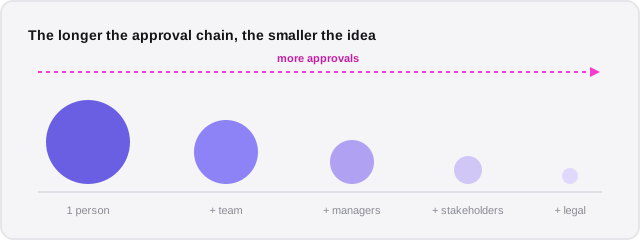
The Ringelmann Effect and Creative Work
In psychology this is called the Ringelmann Effect. In the original experiments, people were asked to pull on a rope. The more people added to the rope, the less each individual actually pulled. Total effort went up; effort per person went down. Everyone assumed someone else was carrying the load.
Applied to creative work: the bigger the approval chain, the smaller the idea gets. Not because anyone is malicious. Because everyone is just a little less responsible than the person before them. Ten people can each make one “small, reasonable” cut and collectively amputate the entire idea — and not one of them will feel like they’re the person who killed it.
This is also why clients often get blamed for work going soft when the softening actually happened long before it reached them. It’s worth remembering that the client isn’t wrong — they’re just scared, and fear distributed across a big enough room stops looking like fear and starts looking like “process.”
We built our studio to keep the chain short.
Small team, senior hands on every project, fewer places for an idea to quietly lose its pulse. Our process runs in four steps — discovery, script, visual direction, delivery — and the idea keeps the same pulse in step four that it had in step one.
So What Do You Actually Do About It?
You don’t fix this by refusing every note or turning every review into a fight. You fix it by protecting the one thing that makes the idea itself — the sharp edge it was built around — and being generous about almost everything else.
Shorten the chain wherever you can. Fewer people, more ownership. Ask of every note: does this make the idea better, or just safer? If it only buys comfort, it’s costing you distinctiveness. And distinctiveness, remember, is the entire job. None of this is about ego, either — awards don’t validate the work, they reveal taste; what you’re really defending is whether the work is allowed to be interesting at all.
Advertising was never meant to be comfortable. The discomfort is the signal that you’re making something people haven’t already seen a hundred times. Chase the comfortable version and you’ll get agreement. Chase the interesting one and you might get remembered.