

You haven’t been genuinely nervous before a presentation in over a year. That’s not a sign you’ve gotten good at this. That’s the real tell.
The moment the job stops being hard is the moment it stops being interesting — and the audience feels that before they can name it.
Studio Notes, Creative & More
Mick Jagger spent an entire song describing the exact emotional state of every creative person who has ever presented work they don’t fully believe in. The trying is visible. The satisfaction never quite arrives.
The Real Tell
Tell me if this is your job right now.
- You know the work could be better, but the deadline is tomorrow.
- You’ve stopped pitching the risky idea first because you already know how the room reacts.
- You describe your job at dinner parties using words like “comfortable” and “stable.”
- You haven’t been genuinely nervous before a presentation in over a year.
That last one is the real tell. Nerves mean stakes. Stakes mean you care. The absence of nerves doesn’t mean you’ve become confident — it usually means you’ve quietly stopped betting on yourself.
The Industry’s Specific Type of Mediocrity
Comfort in a creative career is not a destination. It’s a warning sign. The moment the job stops being hard, the job has stopped being interesting — and the moment it stops being interesting is the moment the audience starts to feel it in the work, even if they can’t name why.
Advertising has a very specific type of mediocrity. Not lazy mediocrity — comfortable mediocrity. Work made by talented people who have found the exact level of effort required to not get fired, and not quite exceeded it. It looks professional. It tests fine. It wins nothing and it changes nothing.
The tell: if you can predict every note a review will produce before you’ve even walked into the room, you’re not being efficient. You’re aiming low enough to never be surprised.
The Way Out Is Deliberate Discomfort
The way out is deliberate discomfort. Pitch the idea you’re not sure about. Put your name on it. Let the room go quiet. That quiet is not rejection — it’s attention, and attention is what you’re actually paid to generate. It’s also, incidentally, the same instinct that tends to end up on an awards shortlist, though a shortlist was never really the point.
Csikszentmihalyi and the Sweet Spot
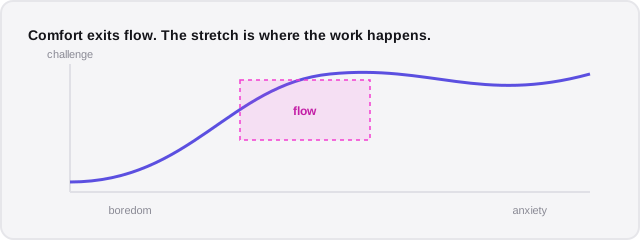
Psychologist Mihaly Csikszentmihalyi’s theory of Flow states that peak performance happens when the challenge of a task slightly exceeds your current skill level. Too easy, and you’re bored. Too hard, and you’re anxious. The sweet spot is the stretch in between. Creatives who deliberately engineer their own discomfort keep taking on work that asks for slightly more than they currently have. Comfort is the exit from flow — and flow is where the best work actually comes from.
We keep our own team a little uncomfortable, on purpose.
Every project gets a small stretch built in — that’s usually where the good idea shows up.
You Own It, You Better Never Let It Go
The safer version always gets approved — that’s why it’s safe. And approved-because-it’s-safe is the quietest way to guarantee your work disappears into the sea of everything else that was also approved because it was safe. Present the idea that scares you a little. You own it. Don’t let the room take it before it’s had a real chance to land.